In 2025, the way we watch television has completely changed. More and more people are cutting the cord from traditional cable and satellite, turning instead to IPTV. But what exactly is it, and how does IPTV work?
This guide breaks down everything you need to know about the technology powering the future of live TV streaming.
What is IPTV?
IPTV stands for Internet Protocol Tele-Vision.
In simple terms, it’s a way of delivering television content over the internet (using an Internet Protocol) instead of through traditional broadcast signals (like cable, satellite, or antenna).
Think of it this way:
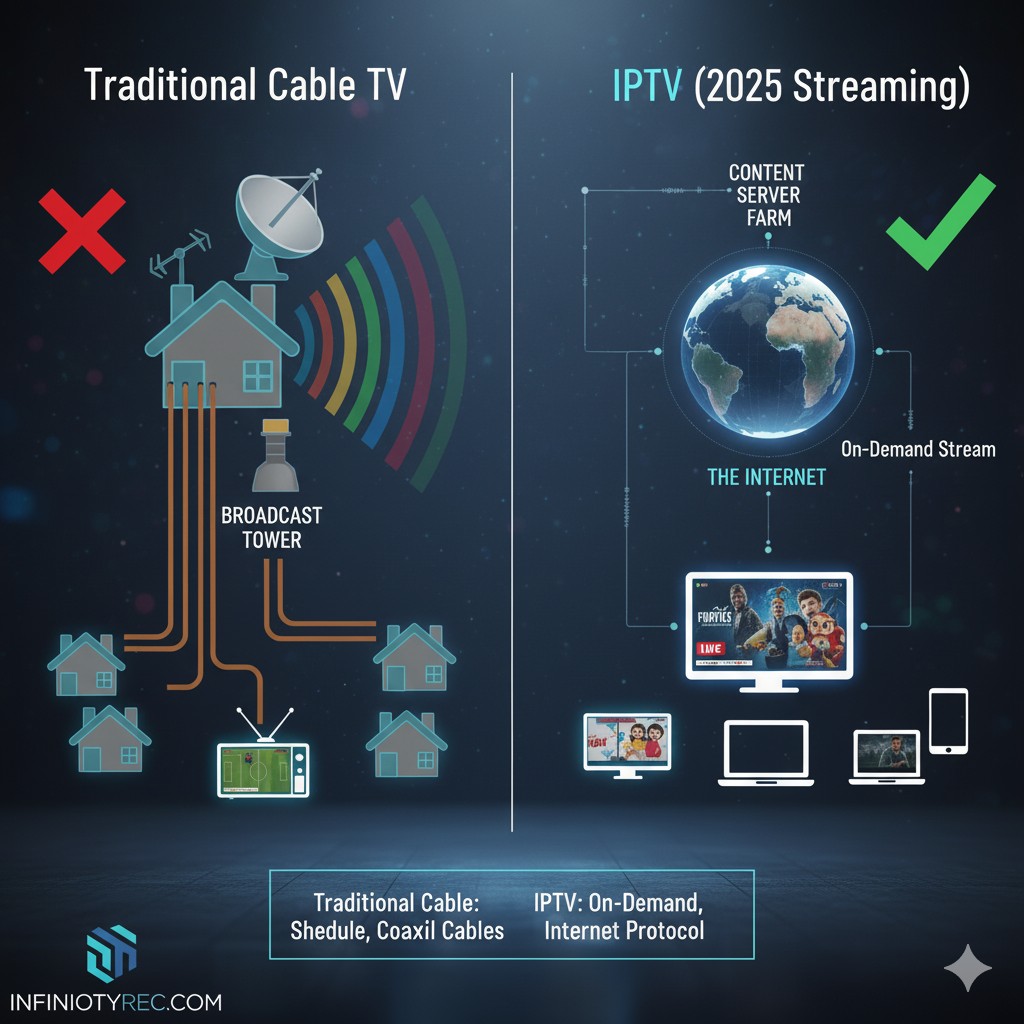
Traditional TV sends out a signal to everyone at once, and you « tune in » to the channel you want.
IPTV is more like streaming a video on YouTube or Netflix. When you want to watch a specific channel, you send a request, and the provider streams that specific channel directly to you. This is the main difference in the IPTV vs cable debate.
Here’s a visual comparison: `
How Does IPTV Actually Work? The Technical Part
You don’t need to be an expert, but understanding the basics helps you choose the best IPTV services. The process happens in a few simple steps:
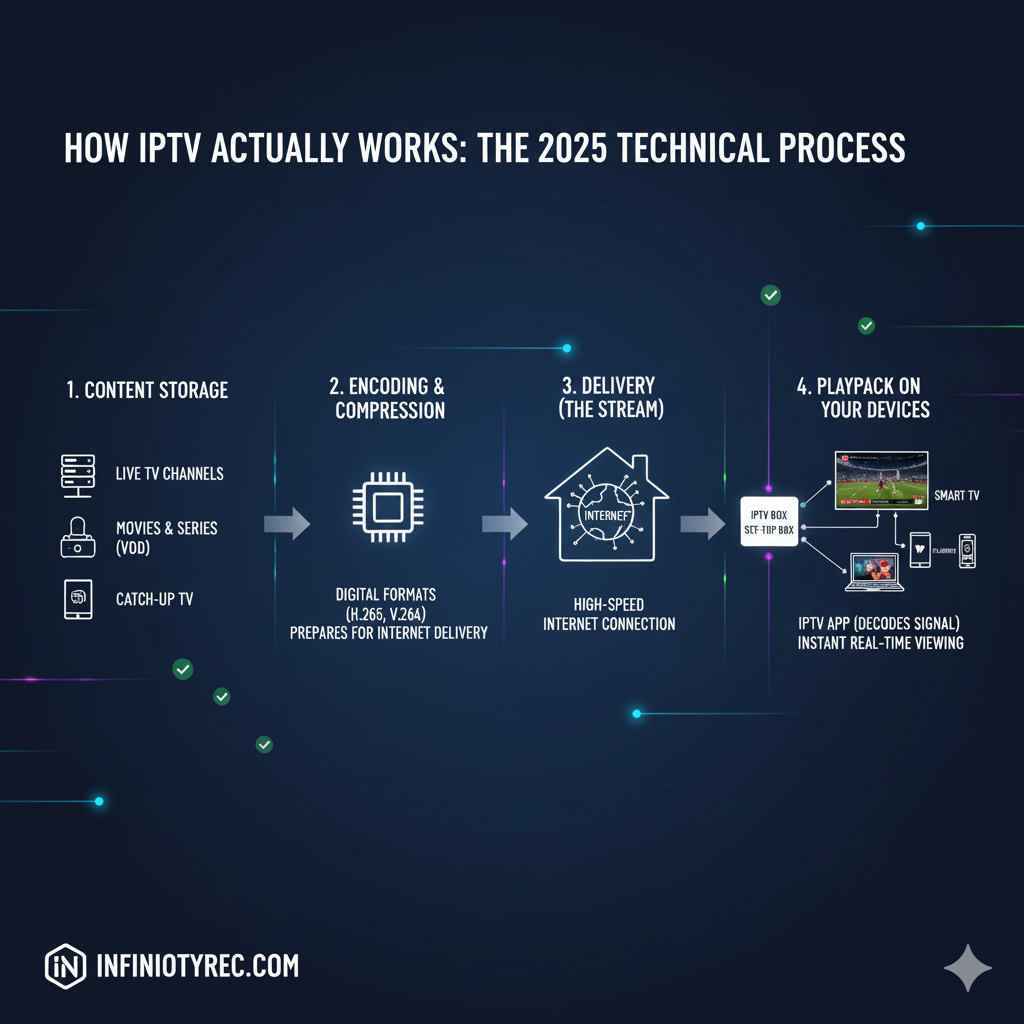
Content Storage: The TV channels and on-demand movies are stored on servers owned by the IPTV provider.
Encoding: When you select a channel, the video signal is compressed and encoded into a digital format (like H.264 or H.265) that can be sent efficiently over the internet.
Delivery (The Stream): Instead of a cable, the encoded video is sent to your home through your standard internet connection.
Playback: An IPTV app or a set-top box on your device (like a Smart TV, Firestick, or computer) decodes the signal and plays it on your screen in real-time.
Here’s a diagram showing the flow of IPTV data: `
The Different Types of IPTV Services
IPTV isn’t just one thing. It usually comes in three main forms:
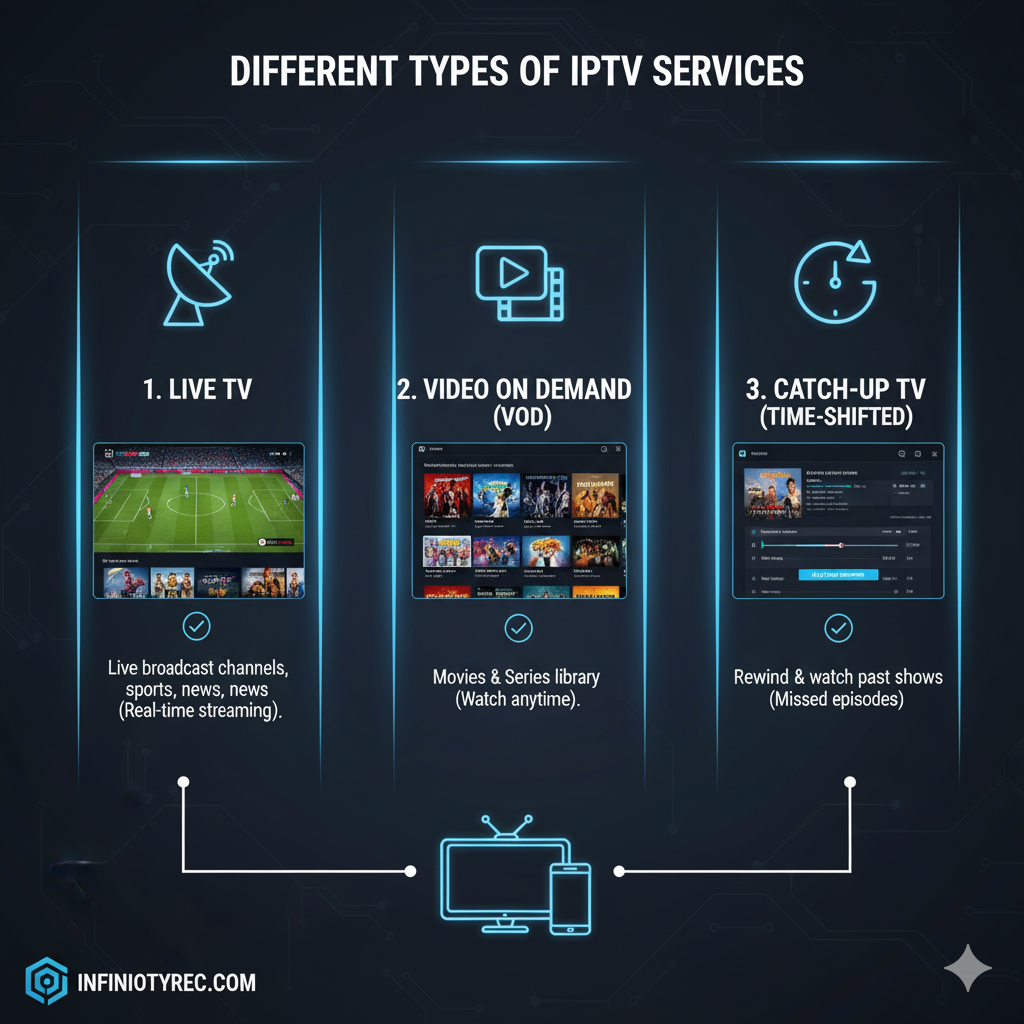
Live TV: This is just like regular cable. You can watch thousands of IPTV channels from around the world as they are broadcast live.
Video on Demand (VOD): This is the Netflix-style service. You get a large library of movies and TV series that you can watch whenever you want.
Catch-Up TV (or Time-Shifted): Did you miss your favorite show? Many IPTV subscription plans allow you to go back and watch shows that aired hours or even days ago.
An illustration of the different IPTV service types: `
What Do I Need for an IPTV Setup in 2025?
Getting started with IPTV streaming is simple. You only need three things:
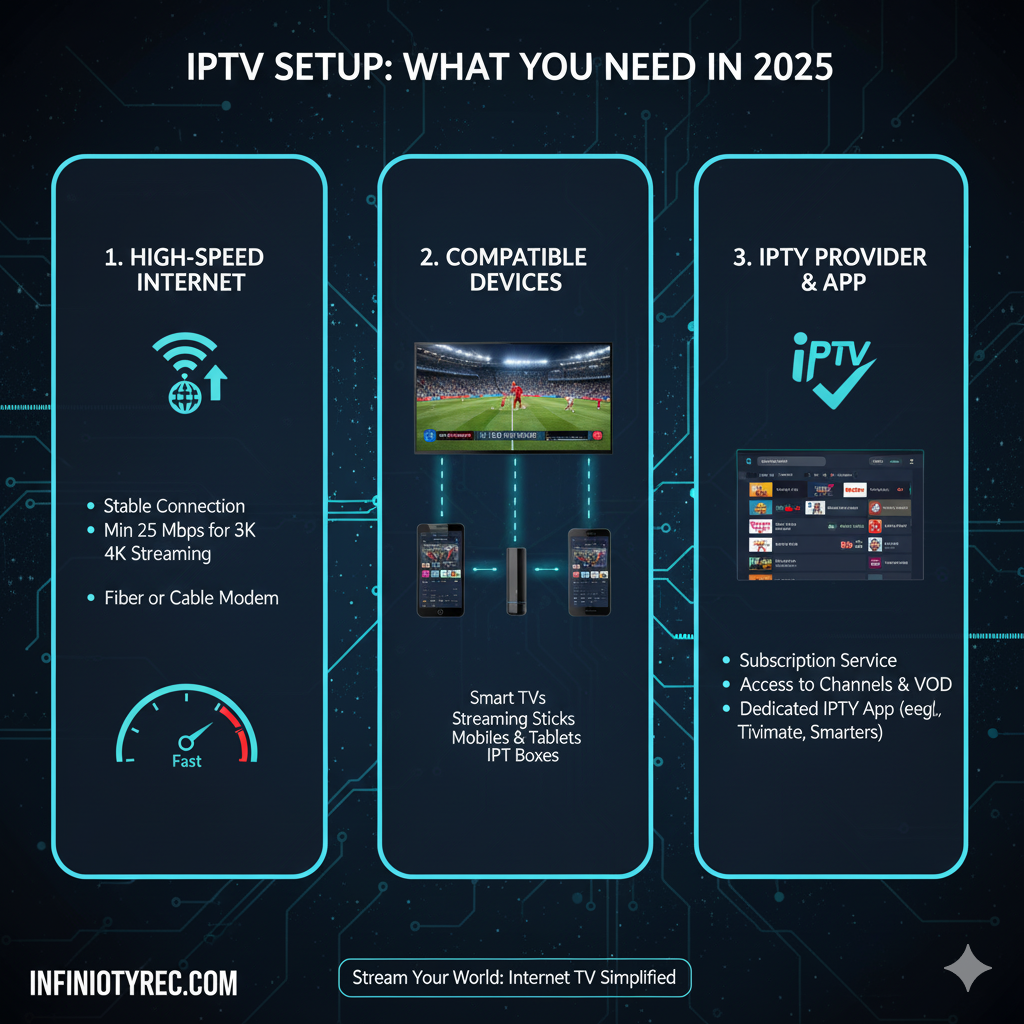
A Good Internet Connection: This is the most important part. For standard definition (SD), you need at least 5-10 Mbps. For stable 4K IPTV streaming, you should aim for 25 Mbps or more.
A Compatible Device: You can watch IPTV on almost anything:
Smart TVs (Samsung, LG, etc.)
Streaming sticks (Amazon Firestick, Google Chromecast)
Smarphones and Tablets (Android & iOS)
Computers (Windows & Mac)
Dedicated IPTV boxes
An IPTV Provider and App: You need a subscription from an IPTV provider. They will give you access to their channels and VOD library, usually through a specific IPTV app (like Tivimate, IPTV Smarters, or their own custom app).
Here’s a visual representation of the necessary components: `
How to Choose the Best IPTV Provider in 2025
Finding the best IPTV provider 2025 can be tricky. Here’s what to look for:
Channel List: Does it have the specific channels you want (sports, movies, international)?
Reliability & Uptime: Does the service buffer or freeze, especially during big live events? Look for providers with good reviews.
EPG (Electronic Program Guide): A good service must have a working EPG so you can see what’s on TV.
4K Support: If you have a 4K TV, check if the provider offers 4K IPTV streams.
Legal Status: Be cautious. Always try to find legal IPTV providers that have the proper licenses to stream content.
IPTV has revolutionized how we access entertainment, offering more flexibility and channel choice than ever before. Now that you know how it works, you’re ready to explore the new world of IPTV streaming.
InfinityRec is a premium IPTV service that offers hundreds of live TV channels, as well as a wide selection of movies, TV series, and on-demand content. With an intuitive interface and multi-device compatibility, InfinityRec allows you to enjoy your favorite shows anytime, anywhere.